HERNING, Denmark — August 31, 2025
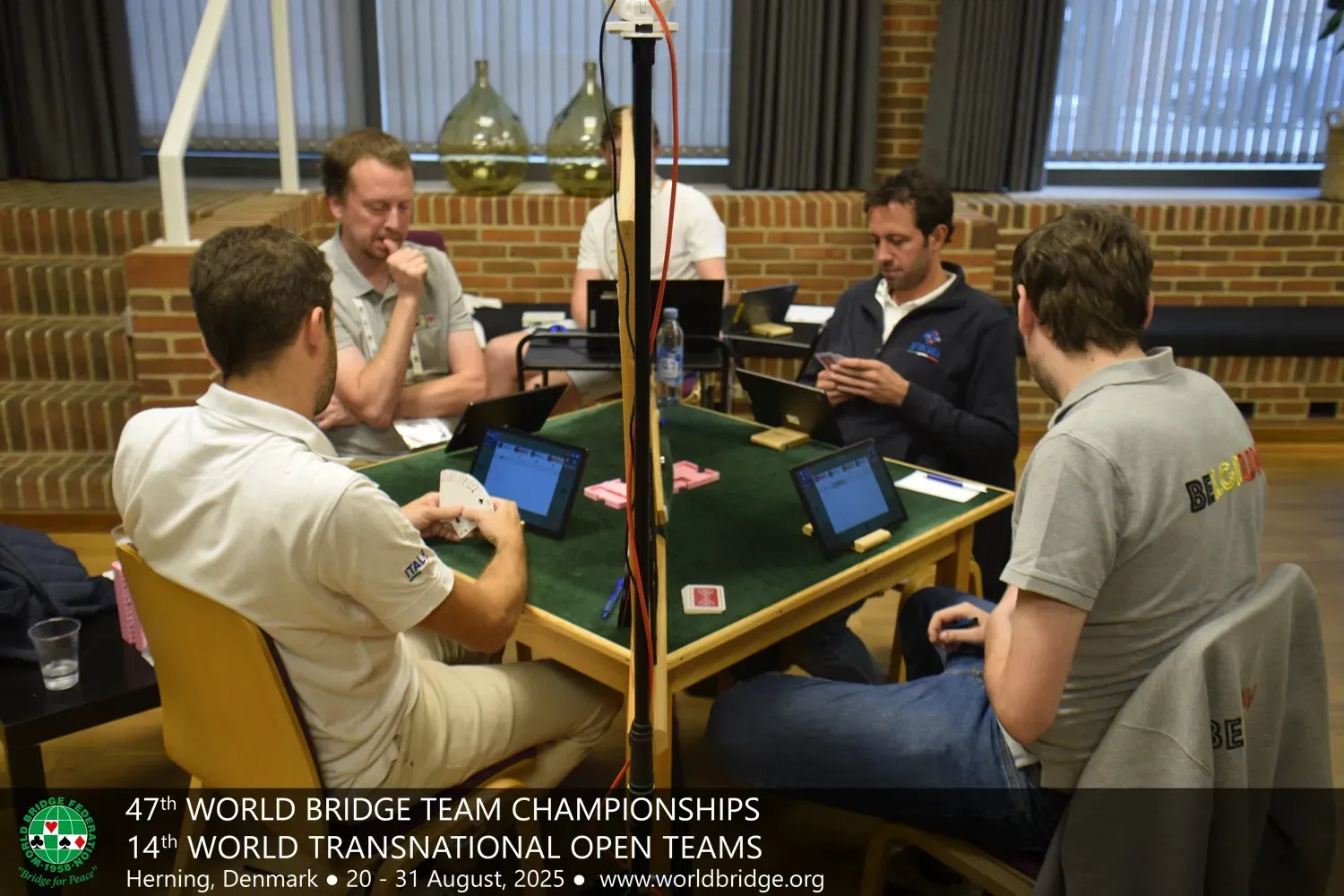
In the quiet city of Herning, Denmark, the world's finest bridge minds gathered for eleven days of intense competition that would determine global supremacy across four prestigious categories. The 47th World Bridge Teams Championships concluded this week, crowning champions in the Bermuda Bowl, Venice Cup, d'Orsi Senior Trophy, and Wuhan Cup—each trophy representing not just victory, but the culmination of decades of dedication to the game.
The championships, held from August 20 to 31, brought together more than 90 nations in a display of competitive bridge that showcased both the game's enduring appeal and its evolution into the digital age. What emerged was a narrative of American dominance, European resilience, and global competitiveness that will resonate through bridge clubs worldwide.
American Excellence Shines in Open Competition
The United States reclaimed the Bermuda Bowl, bridge's most coveted prize, demonstrating the depth of American bridge talent. Team USA 1, featuring Kevin Bathurst, Adam Grossack, John Hurd, Adam Kaplan, Finn Kolesnik, and Eddie Wold under the guidance of non-playing captain Bob Morris, emerged victorious in a tournament where margins of error prove unforgiving.
Their triumph was hard-earned. Denmark, playing on home soil with passionate local support, pushed the Americans throughout the competition, ultimately securing silver. The Danish squad—Michael Askgaard, Dennis Bilde, Kasper Konow, Christian Lahrmann, Andreas Plejdrup-Meister, and Martin Schaltz—demonstrated tactical sophistication that kept spectators riveted. Sweden claimed bronze, with Per-Ola Cullin leading a team that combined technical precision with creative bidding.
The American victory marks a return to form for a nation that has long dominated the sport yet faced increasing competition from European and Asian federations in recent years.
Netherlands Claims Women's Crown in Competitive Field
In the Venice Cup, the Netherlands demonstrated why they remain a force in women's bridge. The Dutch team of Merel Bruijnsteen, Judith Duursma, Magdalena Tichá, Doris van Delft, Wietske van Zwol, and Martine Verbeek, steered by non-playing captain Jacco van Egdom and coach Aarnout Helmich, navigated a challenging field to claim gold.
China's women's team, featuring Guo Ke, Liao Zhengjiang, Wang Jian, Wang Nan, Yuan Xuefang, and Zuo Xiaoxue, earned silver in a performance that underscored Asia's rising prominence in international bridge. Poland secured bronze, with the dynamic duo of Cathy and Sophia Bałdysz anchoring a team that mixed youth with experience.
The women's competition reflected bridge's growing global diversity, with strong showings from teams across three continents demonstrating that excellence in the game recognizes no borders.
Senior Division: American Legends Prevail
The d'Orsi Senior Trophy provided perhaps the tournament's most compelling storyline. USA 1, featuring bridge legends David Berkowitz, Larry Cohen, Steve Garner, Mike Kamil, Jeff Meckstroth, and Jeff Wolfson, captured gold in a field brimming with experience and tactical mastery.
France's senior team, led by Michel Abécassis and featuring Philippe Soulet and Hervé Vinciguerra, earned silver in a performance that showcased the French bridge tradition's enduring strength. USA 2, fielding household names including Zia Mahmood, Bobby Levin, and Eric Rodwell, took bronze—a testament to American depth in senior bridge.
The senior competition serves as a reminder that bridge rewards accumulated wisdom. The winners' combined decades of experience translated into disciplined play where patience and partnership trust proved decisive.
Mixed Teams: Italy Captures Wuhan Cup
Italy claimed victory in the Wuhan Cup, the mixed teams competition that requires both technical skill and seamless gender integration at the table. The Italian squad of Dario Attanasio, Leonardo Cima, Federica Dalpozzo, Barbara Dessì, Gabriella Manara, and Federico Porta, guided by non-playing captain Valerio Giubilo, demonstrated the cohesive partnership that defines championship bridge.
China earned silver, continuing their strong showing across multiple categories, while Poland captured bronze with another impressive performance that highlighted the Eastern European nation's growing bridge prowess.
The Digital Dimension: Technology Transforms Spectating
This championship marked another step in bridge's digital evolution. All bidding occurred through LoveBridge tablets, bringing efficiency and transparency to the game while allowing real-time broadcasting to global audiences. The World Bridge Federation streamed matches live on Twitch, complete with expert commentary, providing fans unprecedented access to elite competition.
The daily bulletins, edited by the venerable Mark Horton with contributions from journalists including David Bird, Brian Senior, and Ron Tacchi, maintained bridge's literary tradition while embracing digital distribution. These bulletins remain required reading for serious bridge enthusiasts, offering hand analysis, behind-the-scenes insights, and the wit that makes bridge culture unique.
The integration of technology hasn't diminished bridge's essential character—rather, it has amplified the drama inherent in each deal, allowing spectators to follow card-by-card decisions that separate victory from defeat.
What the Championship Reveals
The 2025 World Teams Championships illuminated several truths about contemporary bridge. First, the United States remains the sport's superpower, but its dominance is consistently challenged by European nations investing heavily in youth development and training infrastructure. Second, women's bridge continues its upward trajectory, with expanding talent pools producing increasingly competitive fields. Third, bridge's global footprint continues expanding, with representation from 90-plus nations demonstrating the game's universal appeal.
Perhaps most significantly, the championship showcased bridge as a sport where age and experience remain assets rather than liabilities. The senior competition attracted some of the most skilled players in the world, their decades of partnership and game theory knowledge providing advantages that transcend physical reflexes.
Looking Forward
As the players departed Herning, attention already turns to future championships. The bridge calendar never rests—regional competitions, national tournaments, and the next world championship cycle are already underway. For the victors, the triumph in Denmark represents validation of countless hours spent at the table, perfecting systems, analyzing hands, and building the trust that transforms good partnerships into championship teams.
For the Danish hosts, the championship provided an opportunity to showcase their nation's bridge culture and organizational capabilities. The seamless execution of a complex international tournament, from tablet integration to live streaming, set new standards for future hosts.
Bridge, in its 100th year as contract bridge, continues evolving while maintaining the essential elements that have captivated players for a century: the intellectual challenge, the partnership dynamics, the blend of logic and intuition that makes each deal unique. The 47th World Teams Championships in Herning demonstrated that this ancient game remains vibrantly alive, attracting new generations while honoring the traditions that give it depth and meaning.
In the end, championships matter not just for the trophies awarded but for the moments they create—brilliant defenses, audacious bids, partnerships synchronized through years of collaboration. Denmark 2025 provided those moments in abundance, reminding us why bridge endures as one of humanity's great games.